
General Cell Lines and Cell Cultures


ATCC NCI-H1734; Lung Adenocarcinoma; Human (Homo sapiens)
NCI-H1734 [H-1734, H1734] is a cell line exhibiting epithelial morphology that was isolated from the lungs of a 56-year-old female patient with non-small cell lung cancer: adenocarcinoma. This product has applications in cancer research.


ATCC Cutaneotrichosporon oleaginosum; Strain: D
An ampoule containing viable cells (may include spores and mycelia) suspended in cryoprotectant.

Biolegend LEGENDplex™ Mouse PECAM-1 Capture Bead B4, 13X; Reactivity: Mouse; Apps: Multiplex - Component; Size: 100 tests (270 μL)
LEGENDplex™ Mouse PECAM-1 Capture Bead B4, 13X; Reactivity: Mouse; Apps: Multiplex - Component; Size: 100 tests (270 μL)


ATCC SNU-182; Hepatocellular Carcinoma; Human (Homo sapiens)
There is a Permit requirement: License form needed to be completed Material Transfer Agreement Addendum for Screening Application
The forms are available here: https://www.atcc.org/support/order-support/permits-and-restrictions
Abeomics Srf-Re Reporter 293 Cell Line
The SRF-RE Leeporter Luciferase Reporter cell line is a stably transfected HEK 293 cell line which expresses Renilla luciferase reporter gene under the transcriptional control of the serum response factor-response element (SRF-RE). The SRF-RE reporter cell line can be used for studying GPCR-linked RhoA signaling pathways as well as screening of agonists, antagonists or signaling inhibitors related with the RhoA signaling pathways. Functional activity of the cell line has been validated by serum stimulation assay. Cell line application: (1) Monitor the GPCR-linked RhoA signaling pathway, and (2) Screen for activators or inhibitors of the GPCR-linked RhoA signaling pathway. .
CYTION HEK293T/17 Cells 305117
The 293T/17 cell line is an immortalized variant of the HEK293 line, derived from human embryonic kidney cells and extensively utilized in research, particularly in the study and production of retroviral and lentiviral vectors. This cell line has been modified to express the SV40 large T antigen, enhancing its utility in viral vector production. The expression of the SV40 large T antigen is a key feature that allows these cells to replicate plasmids containing the SV40 origin of replication, significantly increasing the yield of plasmid DNA in transient transfection procedures. This feature is particularly beneficial for the production of viral vectors.

ATCC NCI-H211; Small Cell Lung Cancer; Human (Homo sapiens)
NCI-H211 [H211] is a cell line that was isolated from the lungs of a 50-year-old, White female with carcinoma. This product has applications for cancer research and immunology.

ATCC IMR-90 Lung Fibroblast Human (Homo sapiens)
The IMR-90 cell line is made up of fibroblasts isolated from normal lung tissue derived from a 16-week-old female. IMR-90 cells are reported to be capable of attaining 58 population doublings before the onset of senescence. The cell line may be used as an alternate to WI-38 and other human lung cell strains, considering division potential and viral susceptibilities.
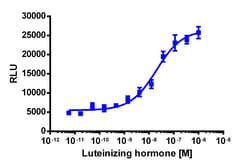
Eurofins Discoverx PathHunter CHO-K1 LHCGR β-Arrestin Cell Line, 2 vials. (93-0957C2)
The PathHunter LHCGR cell line is a stable, engineered cell line for use in studying drug candidates (small molecules or biologics) targeting GPCRs. This cell line enables assessment of ligand (e.g. luteinizing hormone) based activation of LHCGR GPCR activity via detection of β-arrestin recruitment. The included cell line overexpresses ProLink-tagged LHCGR and EA-tagged β-Arrestin-2. Activation of LHCGR stimulates the recruitment of β-Arrestin-2 and produces EFC signal. This stable modified cell line is provided as two vials of cryopreserved cells. For detailed product information, User Manual and datasheet, visit www.discoverx.com/gpcr.
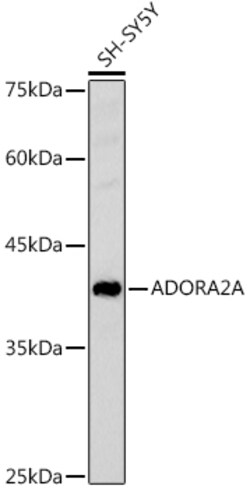
ABclonal Technology ADORA2A Rabbit pAb

This gene encodes a member of the G protein-coupled receptor (GPCR) superfamily, specifically an A2A adenosine receptor. It responds to adenosine, activating G(s) and G(olf) proteins to increase intracellular cAMP levels. The receptor plays key roles in regulating cardiac rhythm, circulation, cerebral and renal blood flow, immune function, pain, and sleep. It is involved in conditions like inflammatory diseases and neurodegenerative disorders. Alternative splicing produces multiple transcript variants, including a read-through transcript with the upstream SPECC1L gene, thought to be non-coding.

ATCC CRFK; Kidney; Cat (Felis catus)
CRFK is a cell exhibiting epithelial morphology that was isolated from the cortex of a female cat. This cell line was deposited by RA Van Deusen.

iQ Biosciences Purified Human CD3 Pan T Cells, 10M cells/vial
High-quality, high-viability (> 90%) human CD3 Pan T cells purified from PBMCs of healthy blood donors sourced from a world-renowned blood center. Highly enriched (> 99%) post-selection purity achieved via magnetic isolation. All orders come with an iQ Certificate of Analysis.
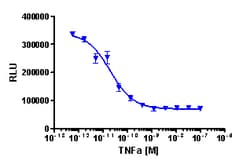
Eurofins Discoverx PathHunter U2OS IκB Degradation Cell Line, 2 vials. (93-0538C3)
The PathHunter U2OS IκB Degradation Cell Line is a stable, engineered cell line for use in studying drug candidates (small molecules or biologics) targeting the NFκB pathway. This cell line enables detection of IκB levels, allowing for assessment of NFκB pathway activation-induced IκB degradation. This product uses EFC technology. The cell line included overexpresses IκB target protein fused to ProLabel. EA is contained in the detection reagent. Upon pathway-activation-induced degradation of IκB EFC signal is lost. This stable modified cell line is provided as two vials of cryopreserved cells. For detailed product information, User Manual and datasheet, visit www.discoverx.com/pathways.
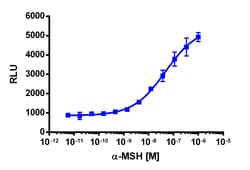
Eurofins Discoverx PathHunter CHO-K1 mMC3R β-Arrestin Cell Pool, 2 vials. (93-0642P2)
The PathHunter mMC3R cell line is a stable, engineered cell line for use in studying drug candidates (small molecules or biologics) targeting GPCRs. This cell line enables assessment of ligand (e.g. α-MSH) based activation of mMC3R GPCR activity via detection of β-arrestin recruitment. The included cell line overexpresses ProLink-tagged mMC3R and EA-tagged β-Arrestin-2. Activation of mMC3R stimulates the recruitment of β-Arrestin-2 and produces EFC signal. This stable cell pool is provided as two vials of cryopreserved cells. Please note that this product expresses the Mouse version of this protein. For detailed product information, User Manual and datasheet, visit www.discoverx.com/gpcr.

Lonza Walkersville Mouse CD-1 Hepatocytes Cryo
Cryopreserved CD-1 mouse hepatocytes suspension format specifically pre-tested for metabolic activity of general Phase I and Phase II metabolism in suspension This product is not suitable for applications requiring adherent cells